Sewer Backups: Everything You Need to Know
Learn what causes sewer backups, how to spot the warning signs, the difference between a drain clog and a main sewer problem, and which repair options offer a real long-term fix.


Most homeowners don't think about their plumbing until something starts leaking. A small leak in a wall or under a sink can continue for months before it's found, and by then the repair often becomes more involved than replacing a pipe or fitting.

Summarize with
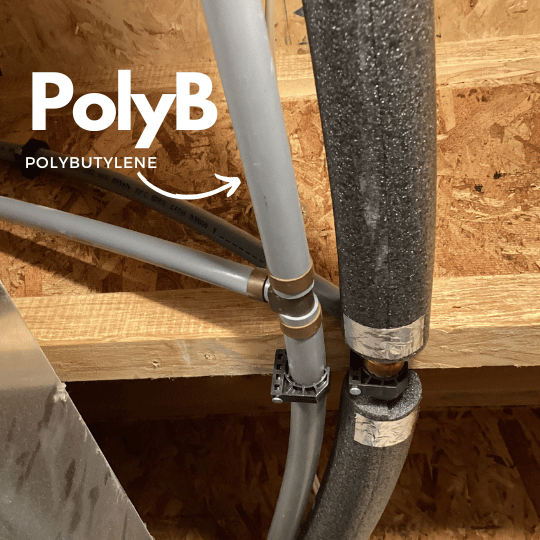
If your home was built between the late 1970s and the late 1990s, there's a chance you have Poly-B (polybutylene) water piping.
Poly-B was originally installed because it was cheap and easy to work with. Over time, it gained a reputation for premature failure. Exposure to UV before installation, chlorine, and other chemicals in municipal water supplies weaken the pipe, making it brittle as it ages. Fittings and connections are also common failure points.
Most insurance companies see Poly-B as a higher-risk plumbing system. Some may request that it be replaced before providing full water damage coverage.
If your home still has Poly-B, it doesn't necessarily mean it will fail tomorrow. However, as the system gets older, the likelihood of leaks increases.
Some leaks happen slowly enough that they continue for months before they're noticed. In that time, water can damage drywall, flooring, cabinets, and insulation while also creating the right environment for mould to grow.
Though harder to notice, slow leaks usually leave signs.
The most common signs are:
A slow leak is generally cheaper to repair than the damage it causes if left alone. Catching these issues early can potentially save thousands of dollars in damages.
Not many plumbing problems are as stressful as finding water in your basement.
There are several reasons this can happen.
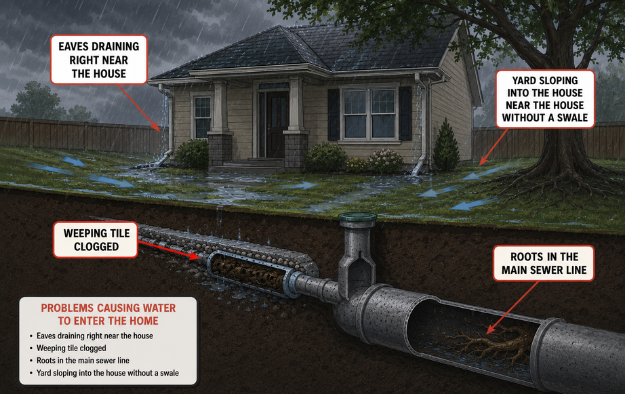
Common causes are:
The purpose of your home's weeping tile is to collect groundwater around the foundation and direct it to a sump pit or, in some older homes, to the sewer. When that system becomes blocked or damaged, groundwater has nowhere to go except into the basement.
Checking your sump pump twice annually and making sure water is directed away from your foundation reduces the risk of basement flooding.
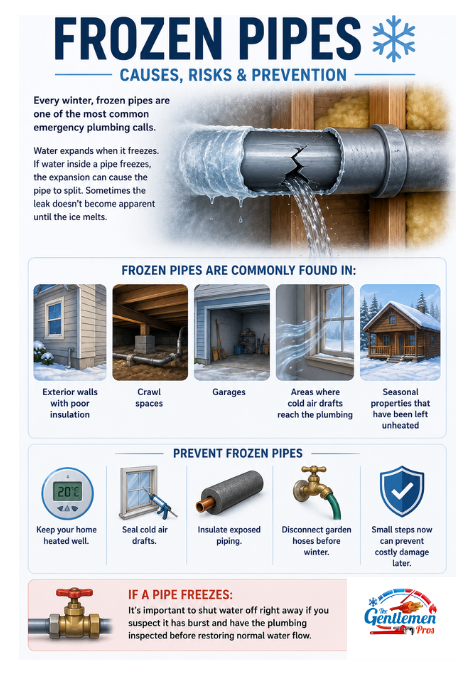
Every winter, frozen pipes are one of the most common emergency plumbing calls.
Water expands when it freezes. If water inside a pipe freezes, the expansion can cause the pipe to split. Sometimes the leak doesn't become apparent until the ice melts.
Frozen pipes are commonly found in:
Keeping your home heated well, sealing cold air drafts, insulating exposed piping, and disconnecting garden hoses before winter all help reduce the risk.
| ⚠ If a pipe freezes, it's important to shut water off right away if you suspect it has burst and have the plumbing inspected before restoring normal water flow. |
Toilets are one of the most frequently used plumbing fixtures in any home. Naturally, they will experience more wear and tear than other fixtures.
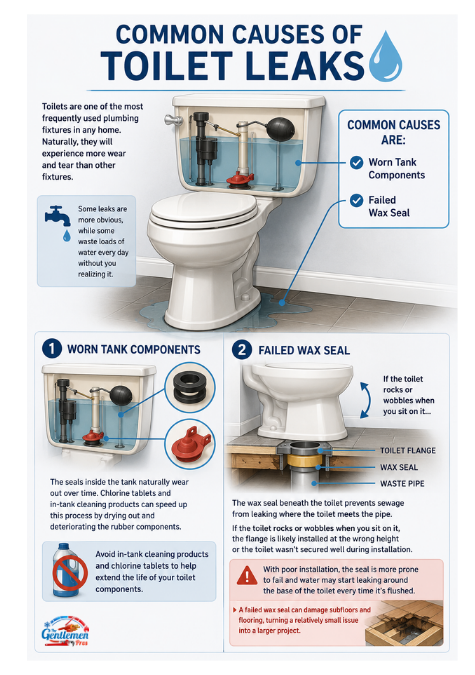
Some leaks are more obvious, while some waste loads of water every day without you realizing it.
Common causes are:
Worn Tank Components
The seals inside the tank naturally wear out over time. Chlorine tablets and in-tank cleaning products can speed up this process by drying out and deteriorating the rubber components.
Failed Wax Seal
The wax seal beneath the toilet prevents sewage from leaking where the toilet meets the pipe.
If the toilet rocks or wobbles when you sit on it, the flange is likely installed at the wrong height or the toilet wasn't secured well during installation. With poor installation, the seal is more prone to fail, and water may start leaking around the base of the toilet every time it's flushed.
A failed wax seal can damage subfloors and flooring, turning a relatively small issue into a larger project.
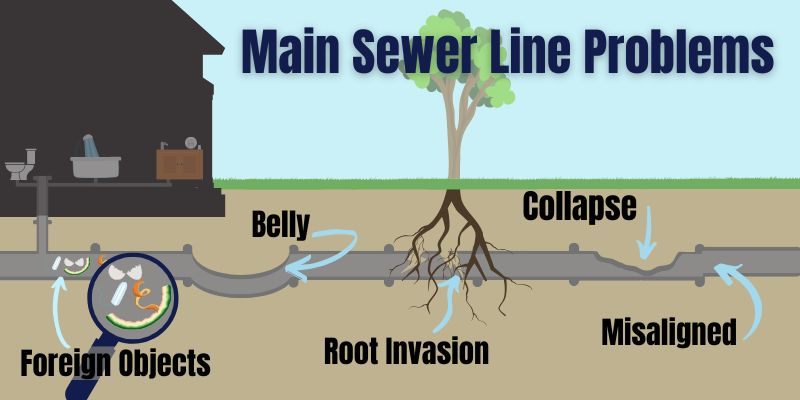
Your main sewer line carries all the wastewater from your home to the city sewer system. Because it's underground, problems frequently go unnoticed until an issue occurs.
In Alberta, two of the most common issues are sewer settlement and tree roots.
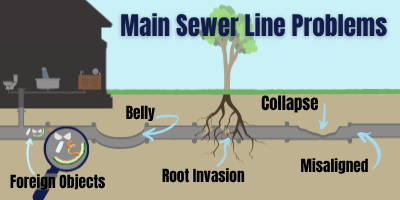
As homes and surrounding soil settle over time, sections of the sewer can shift. This creates low spots, separated joints, cracks, or misaligned pipe connections that restrict water flow and allow debris to accumulate.
Tree roots seek out moisture and nutrients. Even a small gap or crack in the sewer pipe can allow roots to enter the system. Once inside, they continue growing toward the nutrient-rich sewage flowing through the pipe.
Over time, those roots trap toilet paper, grease, and other solid debris until the line eventually blocks, often resulting in a sewer backup inside the home.
Routine sewer camera inspections can discover these issues long before they become emergencies, allowing you to take action before a backup occurs.
Every plumbing system relies on many rubber seals, O-rings, washers, and gaskets to keep water sealed.
You may think these components fail suddenly, but they actually begin to fail the day the system has water introduced.
Years of exposure to water, heat, chlorine, and normal wear slowly cause the rubber to lose its flexibility. As the material ages, it hardens, shrinks, and becomes brittle until it can't maintain a proper seal. Eventually, small drips begin to appear, or the seal gives out altogether.
This is why older plumbing fixtures often develop multiple leaks within a short period of time. The components are all reaching the end of their expected service life at roughly the same time.
Replacing worn seals before they fail is almost always less expensive than repairing the water damage after a leak develops.
A professional plumbing inspection can identify problematic old valves, failing seals, corrosion, drainage issues, and aging materials before they become bigger problems. Combined with regular maintenance, you can avoid expensive water damage repairs.
Like most things in your home, plumbing problems are usually easier and far less expensive to fix when they're caught early.
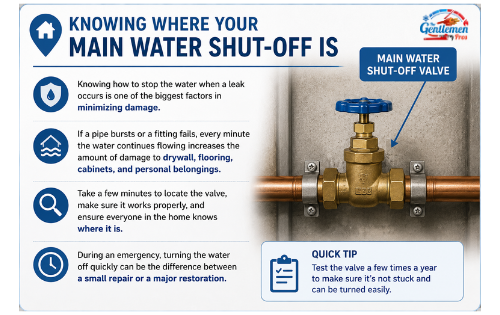
Knowing how to stop the water when a leak occurs is one of the biggest factors in minimizing damage.
Every homeowner should know where their main water shut-off valve is located. If a pipe bursts or a fitting fails, every minute the water continues flowing increases the amount of damage to drywall, flooring, cabinets, and personal belongings.
Take a few minutes to locate the valve, make sure it works properly, and ensure everyone in the home knows where it is. During an emergency, turning the water off quickly can be the difference between a small repair or a major restoration.
Plumbing systems naturally don't last forever, and every component will fail with time. While this is a normal part of homeownership, they don't have to be big emergencies.
The best way to protect your home is to be proactive. Annual plumbing inspections and preventative maintenance can find issues long before they result in damage. Addressing issues early while they're small is almost always less expensive than repairing damage.
TRENDING NEWS
Learn what causes sewer backups, how to spot the warning signs, the difference between a drain clog and a main sewer problem, and which repair options offer a real long-term fix.




Plumbing, heating & electrical service
2026 The Gentlemen Pros