The beginning of Fall is a good time to repair and check problems before the winter begins and the snow starts to fall. It is better to repair small problems before they become big issues.
1. Is Your Main Drain Worth Checking Before the Ground Freezes?
Most homes are just fine here. But if your home is 50 years or older, the odds of tree roots working their way into your main drain go up — and the only way to know for sure is a camera inspection.
Another name for the main drain is the main sewer line. It is attached to the city drain pipes. The main drain pipe pulls all the waste that leaves your home and pushes it to the city drain pipe.
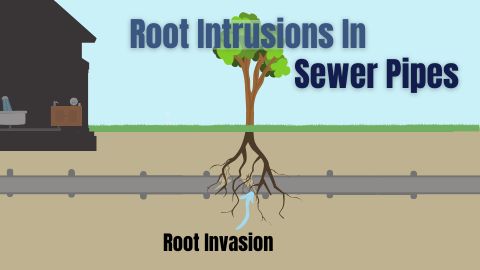
Homes that were built after 1970 have plastic drain pipes. They are less susceptible to cracks or breaks in the main drain. But it is important to remember that cracks can still occur and pipes can still misalign. Misalignments in the pipes can lead to cracks, where roots can cause infestations and clogs, resulting in sewer backups.
When a sewer line backs up, the sewage usually comes in through the basement drain. It causes damage, is disgusting, and is very difficult to clean up. (Yes, it is a nightmare.)
There's no need to worry if your home is newer — but if it's an older property, it's worth a
camera inspection
now, while the ground is still workable. Once it freezes, any repair becomes a much bigger, more expensive job — so a quick check this fall is the easier route.
2. Can Your Eavestroughs Handle Whatever Falls Next — Rain or Snow?
Have you seen what's inside your eavestroughs lately? Most likely, they're full of leaves and debris — carried in from summer storms, with fall leaves adding even more on top. In Edmonton, that debris doesn't just have to deal with rain; an early snowfall is just as likely, and clogged eavestroughs make it that much easier for melting snow to back up and find its way toward your foundation.
Please follow the checklist below to check your eavestroughs and downspouts.
Checklist: Debris in your eavestroughs and downspouts
- Look at your eavestrough for debris
- Check the eavestrough for sagging sections
- Check for seams that are gaping
- Check for loose connections
- Check to see if there are any blocked downspouts
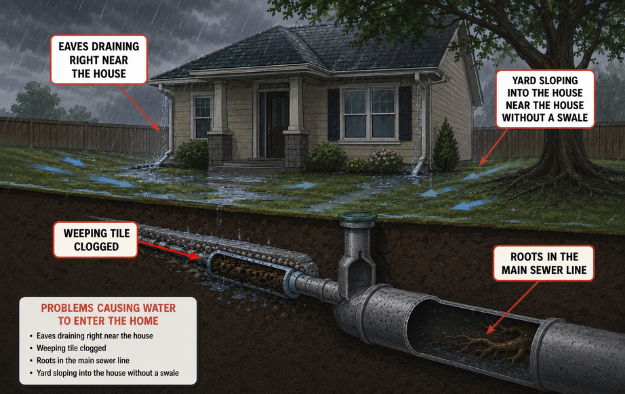
A good time to check is during a rainstorm, or right after a snowmelt — the water is actively flowing, which makes it easy to spot problems.
Important: all water needs to be directed away from the foundation of your home. Also check for loose or downed downspouts, since this can let water pool near the foundation and, ultimately, lead to flooding in your basement.
3. Will Your Sump Pump Keep Up With Rain — or an Early Snowmelt?
A sump pump often sits quietly for long stretches of time. What matters is that it's working the moment you need it — and in Edmonton, that moment can arrive early. It's not unusual to get snow well before winter officially starts, followed by a quick melt that sends a rush of water toward your foundation with little warning.
Before that happens, test your sump pump to make sure it's operating properly. Check that the discharge pipe is clear and that water is being directed away from your home's foundation.
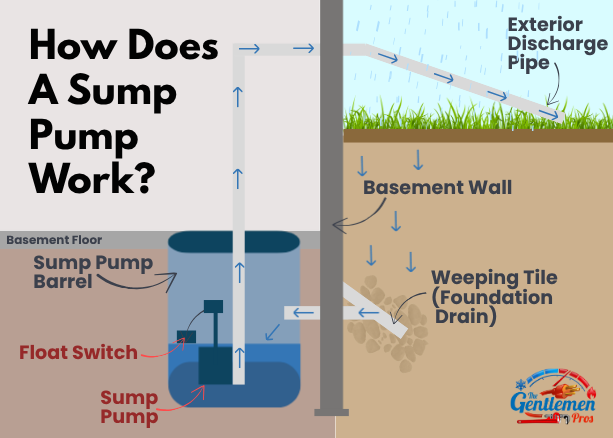
Some sump pumps have battery backup systems, and these should be tested too, to make sure they're functioning properly.
Don't be caught off guard by a rainstorm or a fast snowmelt, only to discover your sump pump isn't working.
4. Is Your Furnace Ready Before the First Cold Snap?
It's easy to forget about your furnace during the warm summer months. Now is a good time to think about it before the chill sets in. Here's a short list to help get it ready.
- Change the batteries on your thermostat
- Change the furnace filter
- Clean around the furnace, ensuring proper airflow
- Check the furnace humidifier for water buildup or leaks, and change or clean the humidifier filter
It's important to have your furnace serviced before winter begins. Did you know your furnace works harder than any other system in your home? That's exactly why early servicing matters — we're swamped with calls during and after severe weather events, so getting ahead of it protects you and your loved ones.
Do everything you can to maintain it. Ask yourself:
Questions to ask about your furnace
- When did you last have your furnace professionally serviced?
- Is your furnace making unusual noises?
- Have you noticed inconsistent heating around the house?
- Does your furnace cycle on and off more often than normal?
- Is your furnace filter dirty?
- How old is your furnace, and is it starting to show its age?
5. Your AC's Done for the Season — Has It Had Its End-of-Year Once-Over?
Cooling season is pretty much wrapped up in Edmonton by this point, but that makes now the right time for a bit of end-of-season care, not less important, just different. A quick check before you stop thinking about your AC for the year helps it start up smoothly again next spring.
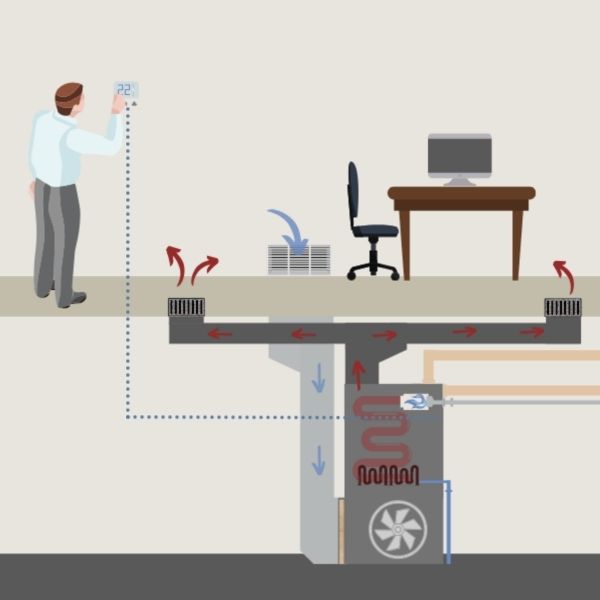
Your central air conditioner uses the same forced-air system and ductwork as your furnace to circulate air throughout your home. (On rare occasions, homeowners may have a mini-split AC unit that operates independently.)
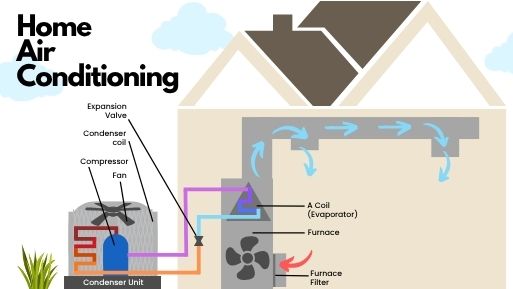
Since the same filter serves both systems, a dirty one restricts airflow for your furnace all winter long, not just your air conditioning system in summer. Swap it out now as part of your fall routine, and give the outdoor condenser a quick clear of leaves and debris before you cover it or leave it for winter.
Check your filter routinely and replace it monthly through the heating season. Change it even more often if you have a large household, pets, or are doing renovations. It's one of the easiest things to do, and it makes a huge difference.
6. Is Your Home's Humidity Set for the Season Ahead?
Indoor humidity matters more than most homeowners realize.
Edmonton winters are especially dry, so it's important to add moisture back into the air. Moisture helps hold heat, which means your furnace doesn't have to work as hard. (It also helps prevent cracks in hardwood floors and wood furniture.)
In the summer and spring, humidity can be set lower to account for the extra moisture already in the air. As fall arrives, it's time to prepare to adjust it higher again.
Too much indoor humidity in colder weather can lead to window condensation and moisture problems, while air that's too dry can make your home uncomfortable.
| Season |
Outdoor Temperature |
Recommended Humidity (RH) |
Why It Matters |
| Winter |
0°C to -10°C |
35–40% |
Comfortable warmth without window condensation |
| Winter |
-10°C to -20°C |
30–35% |
Reduces frost and moisture buildup |
| Winter |
Below -20°C |
25–30% |
Prevents window damage and hidden moisture issues |
| Summer |
Any typical summer temp |
40–50% |
Improves comfort, reduces mold, helps A/C efficiency |
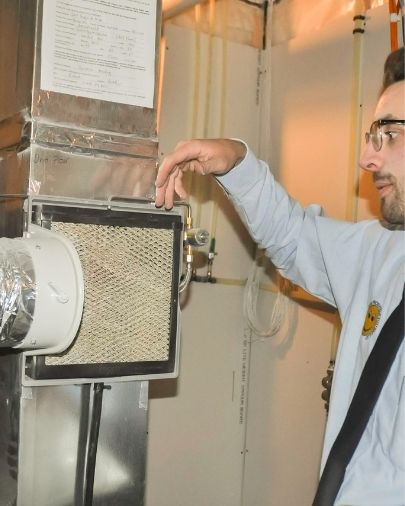
Pro Tip
If you notice condensation on your windows in winter, your indoor humidity is likely set too high. A furnace humidifier with a humidistat can help you dial it in automatically.
7. Could You Have a Plumbing Leak You Haven't Noticed Yet?
It's worth checking for plumbing leaks often. When was the last time you looked under your sinks or around your toilets?
Check underneath sinks, around toilets, appliances and exposed plumbing for
- Drips
- Water stains
- Corrosion
- Damp cabinets
- Musty smells
- Slow drains
- Toilets that seem to run frequently
Small leaks and drips often go unseen for long stretches of time. Finding them early can save you money later.
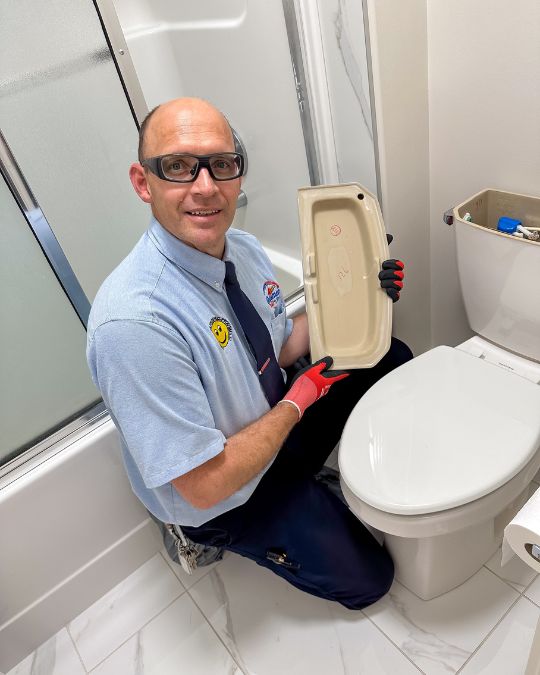
A toilet can have a slow, continuous leak that isn't obvious at first glance, with water continually filling from the tank into the bowl.
Pro Tip
An easy way to check is by dropping a few drops of food colouring into the tank and seeing if the colour migrates into the bowl. If it does, we recommend replacing the toilet — small fixes are possible, but they're usually a short-lived band-aid, and a new toilet is often the better investment.
8. Have You Winterized Your Outdoor Plumbing Yet?
The beginning of fall is a great time to think about your outdoor water lines and hoses.
Start by disconnecting garden hoses and inspecting your exterior faucets for leaks. If a hose stays attached, it can trap water in the line and cause it to freeze in cold weather.
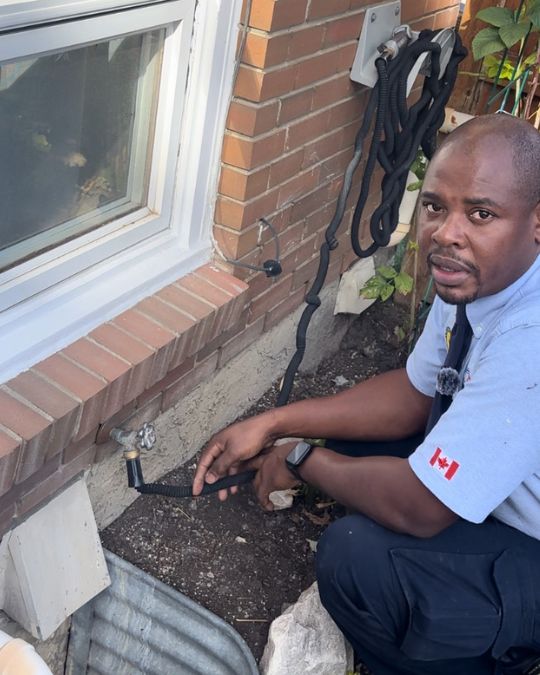
As freezing temperatures approach, it's essential to make sure your outdoor plumbing is properly shut off to avoid a frozen line.
Pro Tip
We strongly recommend installing frost-free outdoor faucets — they protect your outdoor plumbing and help prevent freezing altogether.
9. Do You Know Where to Shut Off Your Water in an Emergency?
If the answer is no, you're not alone — most homeowners don't know where their main water shutoff is located.
If a pipe burst right now, would you know where to shut off the water to your entire house?
Make sure you know where it is, and make sure everyone in your household does too.
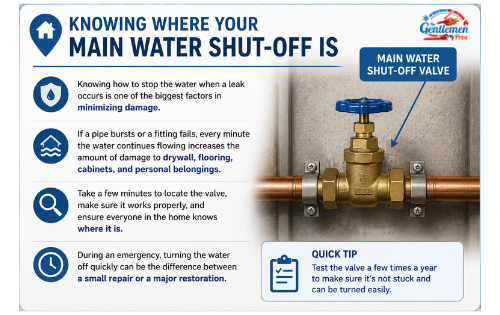
Older homes often have an older-style valve, called a gate valve. Gate valves tend to stick, or can break down, over time.
We recommend replacing it with a ball valve. Ball valves have internal components that are less prone to mineral buildup, making them less likely to stick or break, and they only require a 90-degree turn to shut off.
What Is Your Home Trying to Tell You?
Did your summer season reveal any problems?
Did you notice one room was always hotter than the others? Now that your AC's done for the season, is it due for that quick end-of-year check? Did water pool near the foundation after a storm, or a fast snowmelt? Are your downspouts still connected to your eaves? Is your toilet running, or is there pooling water around it?
If you noticed any of these, it's better to fix them now than to face a bigger problem later.