

What Homeowners Say About Our Garburator Installation & Repair

joanne jones
Jason and Devin are simply brilliant. They initially came to perform a yearly furnace and plumbing inspection. Unfortunately it was found that both of our 28 year old furnaces were dangerous to use, and had to be shut off to avoid harm to any members of the household from carbon monoxide. This didn’t come at the best time of year, with night time temperatures dropping. But Jason stepped in and assured us that our comfort was his priority. He went through the best furnace options for our size of property and floor layout, and once we had agreed on the type of furnace that best suited our home and budget Jason and Devin got straight into dismantling and clearing out the old furnaces. They stayed until 10pm, and were back the next morning at the agreed time to start installing the first of 2 furnaces. They worked tirelessly to get the main floor and basement furnace working before they left at 10pm, to ensure we had some heat to the house. Day 3 Jason and Devin returned to complete the job. Along the way any questions or concerns that we had were answered promptly. Everything was explained in a timely fashion. Jason and Devin demonstrated professional pride in the installation of our new heating system, and the end of job checklist was exhaustive to ensure absolutely nothing was overlooked. Thank you both for your hard work and dedication to seeing a job well done through to the end.
★★★★★
Five-Stars • Google
Treehouse Red Deer
We had Troy for the plumbing issue. he is super kind and well explained. He was on time and he did everything that we asked for within short time period! happy with service :) thank you!
★★★★★
Five-Stars • Google
Abra A
FIVE STARS! Absolutely would recommend this company!! The technician was AMAZING! Explained everything, had charts to show the process and procedures. Went over everything before fixing or charging. Snuggled my dog! Did a free inspection of my home’s plumbing even though he was here for the furnace. He was funny, polite, informative and trustworthy. All the required tools and parts were in his van so the problem was fixed immediately. FIVE YEAR WARRANTY on parts AND labour! Hire this company right now.
★★★★★
Five-Stars • Google
Red Deer Fixtures & Faucets Services
Need Help?
(587) 797-7820Get a consultation

Kitchen Garburator Help
Red Deer plumbers for garburator installation, replacement, troubleshooting, and repairs for leaking, jammed, or worn-out units.
Garburator Installation & Repair
A garburator, also called a garbage disposal, is a useful kitchen appliance that grinds food scraps into smaller particles before they move through the drain system. For many Red Deer homeowners, it makes kitchen cleanup easier and helps manage everyday food waste more conveniently.
That said, a garburator is still part of your plumbing system. If it is installed incorrectly, overloaded, or used for the wrong types of food waste, it can contribute to leaks, jams, under-sink plumbing problems, and drain clogs. Professional installation and sound maintenance go a long way toward keeping the system working properly.
Professional Garburator Installation in Red Deer
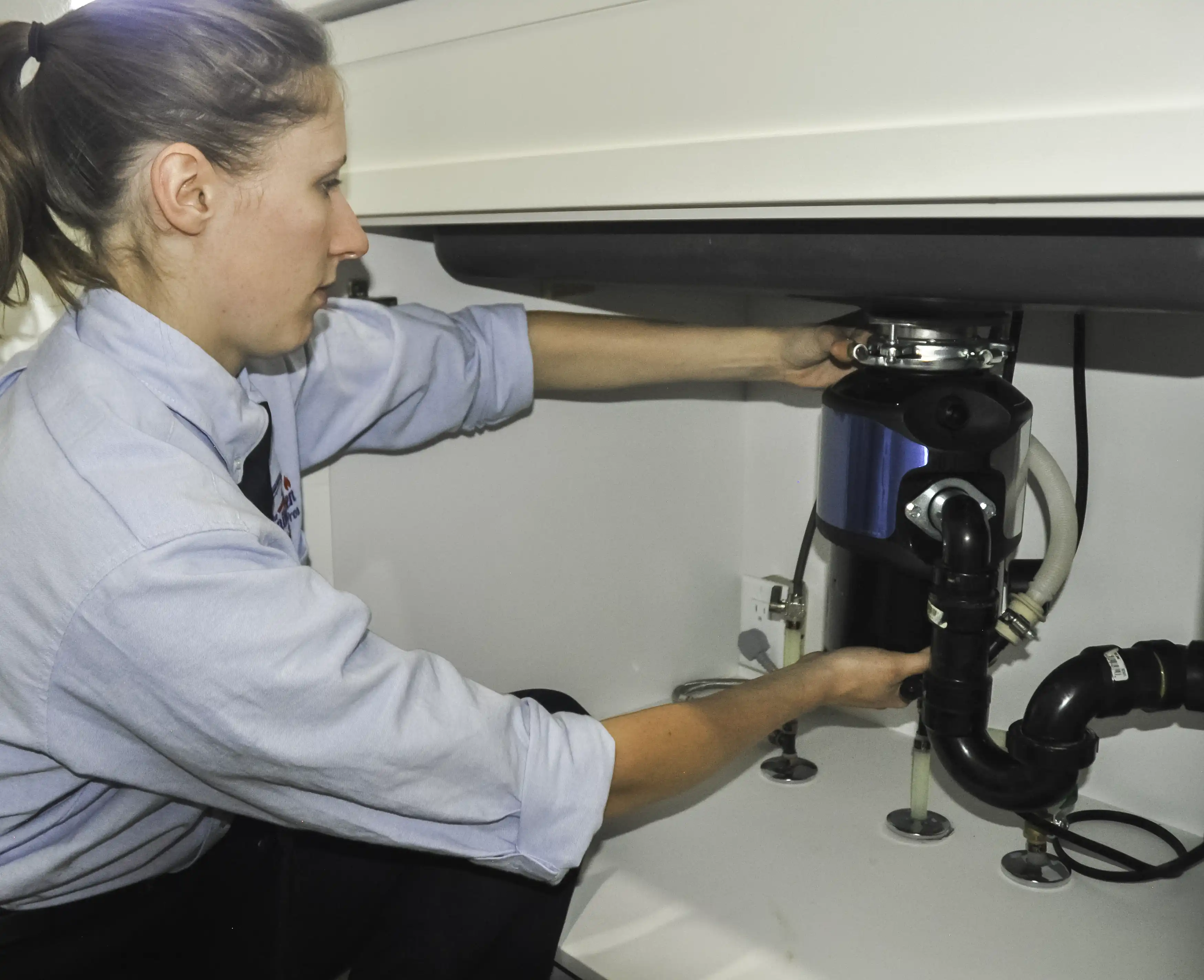
If you are adding a garburator for the first time, there is more involved than simply attaching a unit under the sink. The sink opening, mounting assembly, drain connections, discharge piping, and available clearance all need to be checked. In some homes, the trap arm and other drain components also need to be adjusted to make the system fit properly.
Our Red Deer plumbers install new garburators, replace older units, and make sure the appliance is connected correctly to the sink and drainage system. If there is no electrical rough-in available, power may need to be brought to the area first. Because we also have electricians, we can coordinate that part of the work when needed.
Choosing the Right Garburator
Not every garbage disposal is the same size or power level. The best choice depends on your sink cabinet space, household size, cooking habits, and how often the unit will be used. Some homes need a compact unit because of limited under-sink clearance, while others benefit from a larger and quieter model with more grinding capacity.
Higher horsepower models are often better for larger households or families that cook at home regularly. Smaller units can still work well in lighter-use situations and are often a good fit when space under the sink is limited.
Can Any Sink Have a Garburator?
Most kitchen sinks are designed with a standard opening that can accept a disposal, but under-sink space is often the deciding factor. Plumbing layout, dishwasher drain connections, cabinet depth, and nearby fixtures can all affect what type of unit can be installed.
For first-time installations, electrical access also matters. If the wiring is not already in place, the area may need to be prepared before the disposal can be installed safely and correctly.
Repair or Replace an Older Garburator?
Some disposal problems can be repaired, but not every repair makes financial sense. If the unit is older and developing repeated problems, replacement is often the smarter long-term choice. Common warning signs include leaks, frequent jams, loud grinding noises, poor draining, and a unit that no longer turns on reliably.
As a general rule, many garburators last around 10 years, and some may last longer depending on usage and maintenance. If your unit is already well into its lifespan, investing in a new one may be more practical than paying for repeated service calls.
What Should Never Go Down a Garburator
Garburators are designed to handle everyday food scraps, but they should not be treated like a catch-all for kitchen waste. Many drain problems happen not because the disposal lacks power, but because the wrong materials are being sent into the plumbing system.
- Bones, fruit pits, shells, and corn cobs should stay out of the garburator because they do not break down well and can contribute to blockages farther down the line.
- Fibrous foods such as corn husks, celery strands, peels, and artichokes can wrap around internal parts or create stringy clogs in the drain.
- Pasta, rice, bread, and potatoes can swell with water and form heavy, sticky blockages inside the piping.
- Fat, oil, and grease should never be washed through the unit because they cool and solidify inside drain lines, where they trap other debris and build up over time.
Even a powerful disposal cannot protect the plumbing system from the long-term effects of the wrong waste going down the drain.
Garburator Use and Maintenance Tips
Good daily habits can help extend the life of your garburator and reduce the chance of drain problems. When using the unit, run water at the same time and continue flushing briefly afterward so food particles move through the piping instead of settling near the trap or branch drain.
Regular cleaning also helps. Many homeowners clean their garburator by grinding ice with dish soap or by following the manufacturer's care instructions. Some plumbing systems may also benefit from a bacterial drain treatment designed to help break down organic buildup inside the lines.
Simple Do's and Don'ts
- Run water while using the garburator
- Feed food waste gradually instead of all at once
- Scrape large food waste into the garbage or green bin first
- Wipe greasy pans with paper towel before washing
- Do not put grease, oil, or fat down the drain.
- Do not grind bones, shells, pits, or fibrous vegetables.
- Do not send large amounts of pasta, rice, bread, or potato peels into the unit.
- Do not ignore recurring jams, leaks, or strange noises.
Dishwasher Connections and Common Questions
Some dishwashers discharge through the garburator connection, which is why homeowners sometimes assume a broken disposal means the dishwasher cannot run. In many cases, the dishwasher can still operate, but the setup should be checked if there are drainage concerns or if the disposal has failed in a way that affects the connected plumbing.
If you are unsure whether your current system should be repaired or replaced, our Red Deer plumbers can inspect the unit, check the surrounding drain connections, and recommend the best next step for your kitchen.
Garburator Services
We install, replace, and repair garburators in Red Deer, including first-time disposal setups, under-sink plumbing modifications, jam and leak repairs, troubleshooting, and replacement of older units.
Yes. A plumber can make sure the garburator is mounted correctly, connected properly to the drain system, and fitted to the available space under your sink. If electrical power is not already available, an electrician may also be needed for a first-time installation.
In many homes, installation takes roughly 2 to 4 hours, depending on the sink setup, available space, and whether any plumbing or electrical changes are required.
That depends on the age of the unit and the type of problem. If the garburator is older and having repeated issues like leaks, jams, or motor failure, replacement is often the better long-term value.
Yes, but a first-time installation may require an electrical rough-in. We can coordinate both plumbing and electrical work to help complete the installation properly.
Bones, shells, fruit pits, fibrous vegetables, grease, oil, and foods that expand with water such as rice, pasta, and bread should not go through a garburator because they can damage the unit or contribute to drain clogs.
Benefits of working with us

Professional Under-Sink Fit
We make sure your garburator is properly sized, mounted, and connected to the existing sink and drain layout.

Repair or Replace Guidance
If your current disposal is leaking, jamming, or wearing out, we can help you decide whether repair or replacement makes more sense.

Coordinated Plumbing & Electrical
For first-time installations, we can coordinate the plumbing and electrical work needed to get your new garburator up and running.
Cleaner, Easier Kitchen Cleanup
A properly installed garburator adds convenience to everyday dishwashing and food prep while supporting efficient kitchen cleanup.