·
'Tis the season to start turning on your air conditioning! That is, if you are lucky enough to have air conditioning in your home. In Alberta, we often say it’s not worth it because of the number of days you need it. (If you have joined the home air conditioning club, you can testify that it is worth the investment!) If you are thinking “This is the year!” or if you have already joined the air conditioning club…read on to understand how air conditioning works in a home.
An air conditioning unit is made up of a condenser and an air conditioning coil.
The condenser is the unit that is outside the home. The condenser unit has a condenser fan, a capacitor, and coil lines.
This is an example of a condenser you will see outside a person's home.
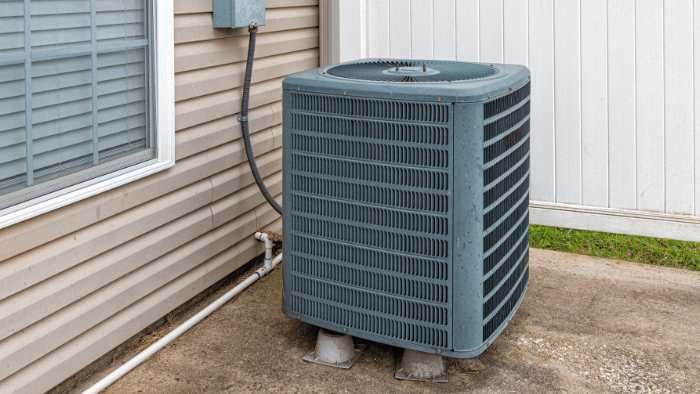
The looping coil lines connect from the condenser to the A-coil inside the unit. The looping coil lines hold a refrigerant. When the refrigerant gas is compressed, its pressure rises, making it very hot. The hot refrigerant gas moves through a series of coils, which has a cooling effect, lowering its temperature, and then it's converted to liquid. The refrigerant liquid then flows through an expansion valve, which causes it to cool down until it evaporates.
The air pushes the refrigerant through the condenser coils and the compressor, then eventually to the A-coil or air conditioning coil. The A-coil is very cold and sits on top of the furnace. The fan of the furnace pushes air through the A-coil, cooling the air as it passes through.
This is an example of an A-coil that sits in a box on top of the furnace. It is like a very cold fridge that a fan will blow air through.
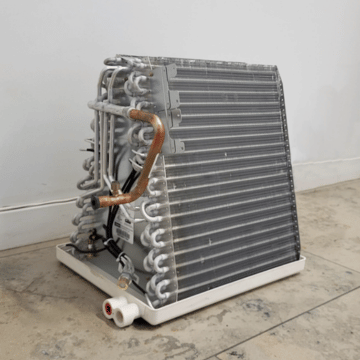
The cold coil lines of the A-coil cause a cooling effect. Air that is blown up by the furnace fan passes through the A-coil. The air then travels through the vents and ductwork — just as it does when the furnace is blowing warm air through to heat the home.
Once the refrigerant has spent its cold air, it returns to the compressor. Once the refrigerant is compressed, the process starts again. As the compressed refrigerant expands it creates a cool effect and again moves towards the A-coil.
Maintaining Your Air Conditioning Unit
Condenser coils need to be cleaned every year!
Cleaning your air conditioning coils will increase the life of your unit and reduce the amount of energy your air conditioner consumes.
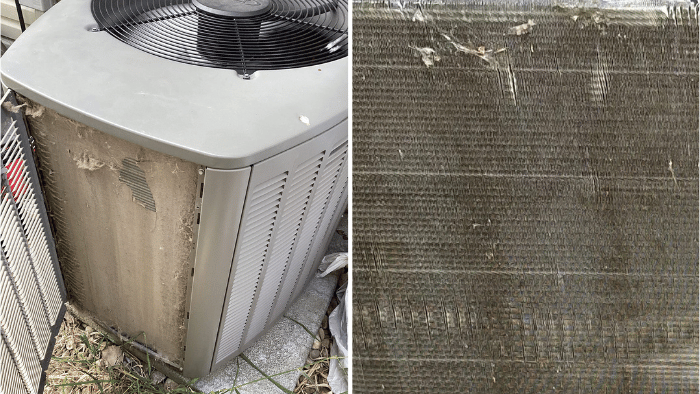
Just like any fan, the condenser unit will suck in air and leave dust and debris on the outside.
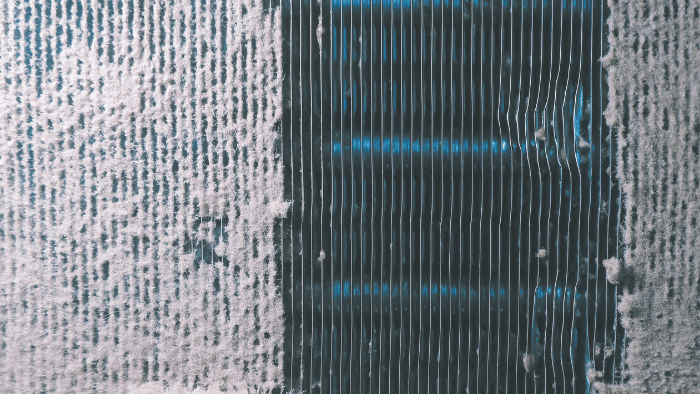
Compressor "fins" are located in the condenser — the outside portion of your air conditioning unit. Look for a metal grate that has metal fins.
The fins are fragile. Be careful.
The fins are part of the condenser that help move heat away from the air conditioner so the refrigerant cools more quickly. Cleaning the fins and screens of the condenser is a key part of maintenance.
This is an example of an extremely dirty condenser that won't let air flow through.
How to Clean Your Air Conditioning Unit
Each year, your air conditioning unit needs to be cleaned and serviced. Our technicians can provide this service. Book a service call if you need our help.
Here are some directions on how to clean your outside air conditioning unit.
- Turn off the power to your air conditioning unit. Turn off the breaker that goes to your air conditioning unit.
- Unscrew the top off of the unit where the fan is, and carefully lift it off. Be careful not to damage the fan as you lift it off.
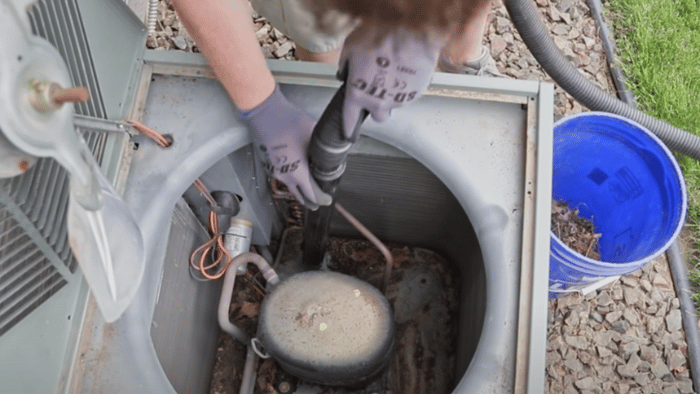
- Use a shop vac to clean leaves and debris caught inside. Be very careful not to damage the metal fins.
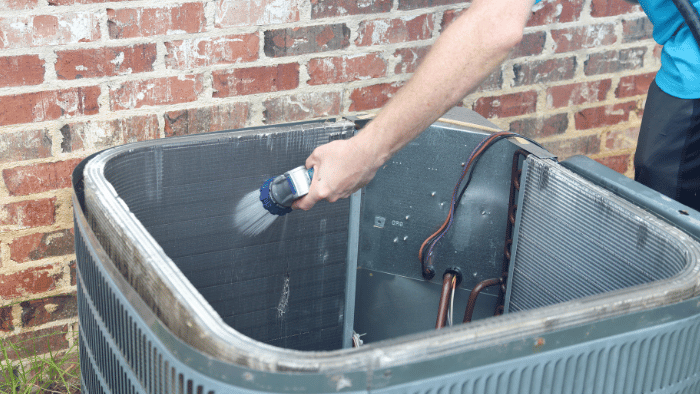
- Apply a spray foam coil cleaner to the fins inside the unit. Let the foam sit for at least 10 minutes. Do not use brushes or cloths — the delicate metal fins will bend and become a permanent air block.
- Rinse from the inside out so mud and debris are not pushed deeper into the components. Use a garden hose with low pressure to spray from the inside out.
| ⚠ Do Not Use a Pressure Washer — it will damage the delicate fins! |
- Use a flashlight to check how well light shines through the fins, to ensure unseen dirt is gone.
- Reassemble the unit — carefully put the top with the fan back on and secure it.
- Turn the power back on to your air conditioning unit.
Why Is My Home Air Conditioning Not Working?
There are lots of issues with air conditioning, but most issues result from restricted airflow.
If the air conditioner is coming on but the air is not cold, you may be experiencing a blockage in airflow somewhere.
Restricted airflow somewhere in the air conditioner system may not allow the refrigerant to get cold.
When the outside part of the air conditioner — the condenser — is dirty, it will impact the performance of the air conditioner. Consequently, it needs to be cleaned every year.
Another area that could have restricted airflow is the A-coil inside the home.
This is an example of a dirty A-coil.
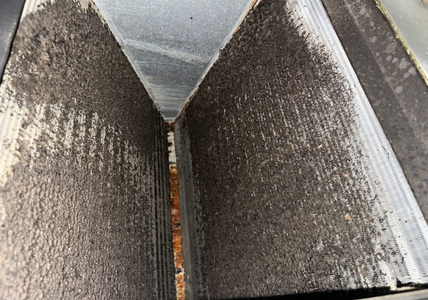
Image credit: Landry Mechanical
Another issue could be that the air conditioning unit comes on, but nothing is blowing. There may be an issue with the airflow from the furnace.
Below are examples of frozen air conditioner units caused by poor airflow or an oversized unit.
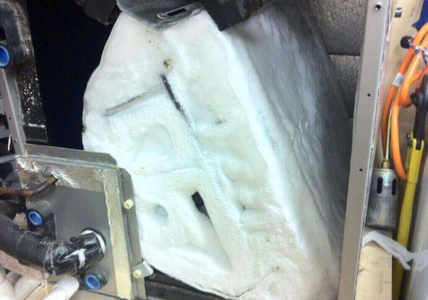
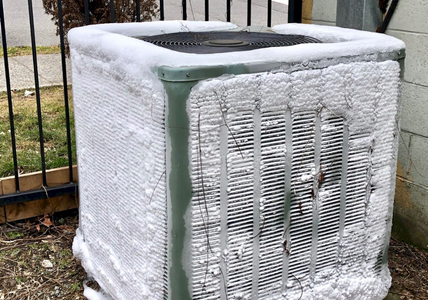
Image credit: Orzech Heating
Leaky Home Air Conditioning Unit
What do you do if your home air conditioning is leaky?
If the refrigerant leaks out of your condenser, your air conditioning unit will need a repair, and possibly a replacement. Often the A-coil will need to be replaced.
Signs that the refrigerant is leaking are ice on the coils. You will see freezing from the inside A-coil to the outside components of the compressor.
Air Conditioning Unit Won't Start
One of the most critical components of an air conditioning unit is the capacitor. It is housed inside the condenser — the outside part of the air conditioning unit.
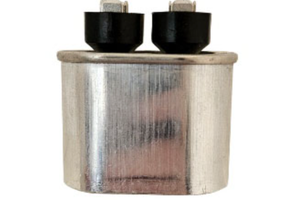
The capacitor is the jump-start for the air conditioning system.
The coolant is under tremendous pressure. It needs a big electrical boost to get moving through the condenser. The capacitor provides a charged kickstart for the condenser to work, as well as a smaller jolt for the fan to start spinning.
The capacitor can burn out or not provide enough electricity to start the condenser fan.
A technician can test this component and confirm whether it is operating within acceptable bounds.